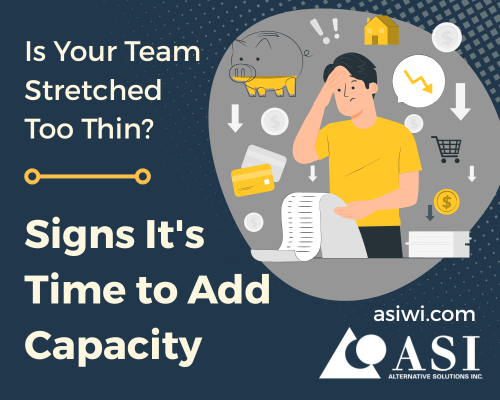
Your IT team resolved 47 production tickets last month. They’re currently supporting three legacy systems while implementing a new policy administration platform. Two strategic initiatives have been pushed to next quarter. Again. And your most senior developer just put in her two-week notice.
If this sounds familiar, you’re not alone. Small and mid-sized P&C carriers face relentless pressure to modernize aging systems, ensure regulatory compliance, and drive digital transformation, all while internal teams shrink and demands grow. The hidden costs of being overstretched extend far beyond delayed projects. They’re about mounting technical debt, compliance risks, and the very real possibility of losing your most valuable people to burnout.

Key Warning Signs It's Time To Add Capacity
Your Team Is Stuck Between Legacy and Modern
The challenge isn’t just maintaining aging systems or implementing new platforms. It’s doing both simultaneously. Your team spends mornings troubleshooting legacy COBOL or VB6 issues, then pivots in the afternoon to cloud migrations and API integrations. This constant context-switching leaves little bandwidth for the strategic work that actually moves the needle.
When individuals are pulled in too many directions at once, even the most capable professionals become overwhelmed by competing priorities. Ticket backlogs grow faster than they shrink, no matter how many hours the team puts in.
Critical Skill Gaps Are Slowing You Down
Smaller teams often have fewer but more tenured employees. While continuity seems like an advantage, it can create knowledge silos. These long-serving team members bring invaluable institutional knowledge, but their skills are often limited to what they’ve learned supporting existing systems over the years. This lack of exposure to newer technologies and industry best practices can prevent innovation and cause future system changes to miss compliance requirements or introduce vulnerabilities.
Statistical reporting is one of the most common skill gaps in P&C carriers. Data accuracy and timely reporting are critical, but when issues arise, tracking down data problems becomes a burden that pulls your team away from other priorities. Similarly, niche areas of your systems (whether extremely fragile components or stable systems untouched for years) can create bottlenecks when your internal team no longer has the specialized skills needed.
Production Support Always Takes Priority Over Strategy
When your team is stretched thin, time-sensitive production issues naturally demand immediate attention. Pressure from business units and insureds for prompt resolution means strategic initiatives get pushed further down the list, quarter after quarter. That modernization project? The compliance upgrade? The new product rollout? They’re all waiting for a moment when production issues calm down enough to free up the team.
Burnout and Turnover Are Taking Their Toll
The constant pressure to resolve critical issues quickly can devastate team morale. When your best people leave, the remaining team members must pick up the slack, compounding the problem. Watch for team turnover carefully. Even normal departures can tip an already-strained team into crisis mode, threatening the loss of irreplaceable institutional knowledge.
Resource Constraints Block New Opportunities
You can’t take on that new product launch. The regulatory change implementation is delayed. Business leaders are frustrated because IT has become a bottleneck rather than an enabler. Growing frustration spreads beyond IT when other departments can’t get the support they need, projects stall, and workarounds become the norm.
Compliance Issues Are Emerging
Reporting errors and regulatory fines are red flags that your team simply doesn’t have the capacity to maintain the level of accuracy and attention required. Worse yet, overloaded teams looking to dig themselves out may prioritize quick fixes over comprehensive solutions, creating compliance vulnerabilities down the road.

The Real Risks of Ignoring Capacity Problems
When teams operate beyond capacity, the consequences compound quickly. Project timelines balloon. What should take two years stretches to five or more. Data errors creep in, leading to reporting fines and regulatory exposure.
Every delayed modernization initiative widens the gap between your capabilities and market expectations. Every talented team member who leaves takes years of knowledge with them. Every regulatory fine chips away at profitability. The cost of inaction isn’t just about what doesn’t get done. It’s about what gets done poorly under pressure.

How IT Staff Augmentation Brings Relief
Staff augmentation delivers specialized expertise exactly when and where you need it. Rather than waiting months to hire and onboard full-time employees (a process that can stretch on while your capacity crisis deepens), you gain immediate access to skilled professionals who understand both the technology and the P&C insurance context.
The financial impact can be substantial. Faster time to market for new products translates directly to increased written premium. Resolving compliance issues quickly means avoiding or ending costly regulatory fines. Beyond these tangible returns, you gain increased agility to respond to regulatory changes and market opportunities.
Faster Progress on Strategic Initiatives
Augmented capacity means your modernization projects can move forward while production support continues uninterrupted. Consider the experience of one large carrier that partnered with ASI during their multi-year migration to a new policy and claims administration system. They realized their internal team couldn’t both implement the new system and handle day-to-day production issues on legacy platforms.
ASI took over legacy support, allowing the internal team to focus entirely on the new system buildout. As migration progressed line by line, ASI’s involvement naturally scaled down, but the team remained available to help when needed. The result? A modernization project that stayed on track instead of stretching from two years to five.
Specialized Skills Without Long-Term Commitments
Need expertise in statistical reporting? Legacy system maintenance? Regulatory compliance? Staff augmentation lets you access niche skills without the overhead of full-time hires. While hourly rates may appear higher at first glance, you avoid the long-term costs of full-time employees: benefits, payroll taxes, onboarding expenses, and downtime between projects. You maintain the flexibility to scale based on actual needs rather than fixed headcount.
With over 30 years supporting P&C carriers, experienced partners like ASI bring knowledge from countless projects and can deliver solutions that fit your specific situation. This isn’t a theoretical advantage. It’s the difference between a resource who needs months to understand insurance-specific requirements and one who arrives already fluent in policy administration, claims processing, and regulatory reporting.
Relief That Improves Team Morale
When internal teams constantly firefight production issues, adding outside resources lessens the load. The relief is often immediate. Engagement improves, stress decreases, and your team can focus on work that energizes rather than exhausts them. The right augmentation partner operates as an extension of your team, prioritizing communication and collaboration to quickly learn your systems and deliver results everyone can be proud of.

When to Take Action
Certain triggers should prompt immediate conversation. System failures your team can’t resolve quickly. Reporting fines that indicate deeper capacity or knowledge issues. Executive pressure for faster modernization that current resources simply can’t deliver.
Monitor the progress your team makes on annual initiatives. If they’re always too busy with production support to tackle strategic projects, it’s time to seek help. The moment you recognize these patterns is the moment to start exploring solutions.

What Solutions Look Like for P&C Carriers
In the P&C insurance context, staff augmentation isn’t one-size-fits-all. It’s about finding the right skills for your specific challenges, whether that’s supporting legacy systems during modernization, filling expertise gaps in statistical reporting, or providing backup for key individuals who’ve become single points of failure.
The right partner understands you’re not just looking for developers or technicians. You need professionals who know the insurance industry, understand regulatory requirements, communicate effectively with both IT and business stakeholders, and genuinely care about your success.
Why Onshore Expertise Matters
The appeal of offshore outsourcing is understandable. Lower rates and technical credentials can look attractive on paper. But many carriers discover that offshore resources, while technically skilled, lack the P&C insurance knowledge that prevents costly delays and rework. Misunderstood requirements and the need to constantly re-explain insurance-specific contexts can end up costing significantly more in the long run than the initial savings suggested. Onshore partners with deep insurance experience understand your challenges from day one. They’re available for real-time collaboration during your business hours, integrate seamlessly with your team’s workflow, and bring insurance-specific knowledge that accelerates every project.

Addressing Common Concerns About Staff Augmentation
If you’re hesitant about staff augmentation, you’re not alone. Many IT leaders have questions based on misconceptions or past experiences with vendors who didn’t deliver.
- "Isn't staff augmentation just for short-term needs?" Many carriers use staff augmentation for long-term engagements, especially for niche skill sets, legacy system support, or ongoing software maintenance. The flexibility works both ways. You can scale up for major initiatives and scale down as needs change, but the relationship and knowledge transfer continue.
- "Won't it be more expensive than hiring full-time employees?" While hourly rates may look higher, consider the total cost. Staff augmentation eliminates expenses like benefits (often 30-40% of salary), payroll taxes, recruiting costs, onboarding time, and the risk of a bad hire. You pay for productive work when you need it, not for downtime or training on skills you'll only use occasionally.
- "Will outside consultants really be as committed as our full-time team?" The right partner operates as an extension of your existing team through consistent communication and collaboration. You're working toward the same goals and solving problems together. When consultants are invested in long-term relationships rather than transactional projects, their commitment matches that of your internal team.

Take the Next Step
You don’t have to keep fighting capacity battles alone. When you partner with the right IT augmentation provider, you gain clarity where there’s confusion, continuity where there’s chaos, and confidence where there’s risk.
Your team gets the relief they need to focus on strategic work. Your business gets the agility to pursue new opportunities. Your leadership gets the assurance that critical initiatives will actually move forward.
Ready to explore how staff augmentation can help your team thrive? Schedule a complimentary consultation with ASI. We’ll discuss your specific challenges, review your current capacity constraints, and explore solutions tailored to your environment. No obligation, just a conversation about what’s possible.
Let’s talk about how ASI can deliver solutions for you.